
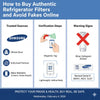
Fake or Real? How to Verify a Genuine Samsung Water Filter
, by ABM Service, 8 min reading time
""Free Shipping on USA"" We do not provide any authorization invoice for amazon Resale.
, by ABM Service, 8 min reading time
You paid for a Samsung water filter, but is it really the product you expected? Many homeowners assume every filter sold as "genuine" is the real thing. Sadly, counterfeit filters still make their way into the market and can look very similar to authentic ones.
A fake filter may not deliver the same water quality, fit, or performance as a genuine Samsung filter. That makes it harder to know if you're getting the value and protection you paid for.
The good news is that Samsung offers a simple way to check filter authenticity. A few quick steps can help you confirm your filter and avoid costly mistakes. First, let's look at why verifying that a water filter is genuine matters.
Using an authentic Samsung refrigerator water filter is essential for maintaining clean, great-tasting water and supporting the overall performance of your appliance.
Using an authentic Samsung filter can help provide:
Using counterfeit or unauthorized replacement filters can lead to:
Since many counterfeit filters closely resemble legitimate Samsung products in both packaging and appearance, knowing how to verify authenticity before purchasing is an important step in protecting your water quality and your refrigerator investment.
Step 1 - Install Samsung’s Official Verification App
Start by downloading Samsung’s official filter authentication app, designed specifically for validating refrigerator water filters.
You can find the app on:
The app enables users to verify eligible Samsung refrigerator water filters by scanning the security label provided on the product packaging.
Step 2 - Find the Security Verification Label
Authentic Samsung water filters are packaged with a security label that contains a scannable QR code. This label is typically attached to the product box and serves as the key to the verification process.
Before scanning, make sure the label is:
A clear and intact label helps ensure a successful authentication check.
Step 3 - Complete the QR Code Scan
Launch the verification app and choose the scan option.
Position your phone so the QR code appears within the scanning frame shown on the screen. The app will automatically read the code once it is properly aligned.
For the best results:
After the code is captured, the app will begin validating the filter.
Step 4 - Check the Authentication Details
Once the scan is complete, the app will display the verification status.
For a legitimate Samsung filter, the application will indicate that the product has passed authentication.
Additional information may include:
In most cases, an authentic filter will show only a small number of scans. If the scan count is unusually high, such as more than five scans, it may be worth investigating further before using the product.
Beyond scanning authentication labels, there are several other indicators that can help you spot a non-genuine water filter.
Certification Marks: Authentic filters typically display certification logos from recognized organizations such as NSF International or the WQA Gold Seal program. If a filter lacks certification details or displays logos that appear questionable, verify the certification directly through the certifying organization’s database.
Packaging Quality: Examine the box and labelling carefully. Poor print quality, spelling errors, inconsistent fonts, misplaced graphics, or unusual formatting can all be signs that the product is not genuine.
Filter Weight: Genuine filters often contain a specific amount of filtration media and internal components. Counterfeit versions may feel noticeably lighter due to lower-quality materials or reduced filtration content.
Unusually Cheap Pricing: Be cautious of heavily discounted filters sold through unknown sellers, third-party marketplaces, or overseas websites. Prices that seem far below normal retail value are often a warning sign that the product may be an imitation rather than an authentic replacement filter.
Here are several physical details that can help distinguish an authentic filter from a counterfeit version:
Identification codes or molded markings are often present on genuine filters, while imitation versions may have no markings at all.
Product information on authentic filters is typically clear, organized, and easy to read, whereas counterfeit labels may appear cluttered, inconsistent, or poorly formatted.
Printing quality can be another indicator. Genuine filters generally feature sharp text and high-quality labels, while fake products often show blurry printing or lower-grade materials.
Security labels and holographic stickers should match the manufacturer's design. Counterfeit filters may use imitation holograms that look different from the original.
Check the positioning of the filter lugs or locking tabs. Authentic filters are manufactured with precise alignment, while counterfeit versions may have tabs positioned incorrectly.
Product descriptions, model references, and other printed wording should be consistent with official manufacturer specifications. Fake filters often contain altered or inaccurate text.
Batch codes, serial numbers, or production identifiers may differ from those found on legitimate products and can sometimes reveal a counterfeit item.
Inspect the edges and application of labels. Genuine filters typically have clean, professionally finished labels, while counterfeit versions may show peeling, uneven placement, or rough edges.
The nozzle or connector should be well-made and securely constructed. Poor-quality nozzles may not fit properly within the refrigerator's filter housing.
Identification numbers should be clearly printed or molded in the correct location. Counterfeit filters may feature inconsistent numbering or poor placement.
Authentic filters usually include the proper safety icons, certification details, specifications, and disposal information. Missing or incorrect markings can be a warning sign that the filter is not genuine.
A strong indicator that a water filter may not be genuine is the absence of an official certification label on the packaging, particularly when the product is expected to carry third-party approval; in such cases, verification through the relevant certification database can help confirm authenticity.
Packaging inconsistencies are another red flag, including incorrect branding elements, unusual symbols, spelling mistakes, or generally low-quality print and labeling.
You may also notice physical differences in the product itself, as counterfeit filters are often lighter in weight compared to authentic ones due to the use of inferior materials.
Occasionally, the verification app may return a notification such as “Authentication Timeout” during the scanning process.
This message often indicates that the QR code was not scanned successfully, rather than confirming a problem with the filter itself.
If this occurs:
If repeated scans are unsuccessful, the app may provide an option to submit a report for further review.
Should the filter remain unverified after multiple attempts, it is recommended to contact the retailer or supplier for assistance before installing the product.
In addition to manufacturer-branded filters, many high-quality replacement options are available from trusted suppliers. These alternative filters are often produced in certified facilities and are designed to meet rigorous standards for filtration performance, safety, and reliability. Counterfeit filters, however, are typically made with little attention to quality control, testing, or certification requirements.
Choosing a counterfeit filter can put both your household and your appliance at risk. Poorly made filters may fail to reduce contaminants such as lead, chlorine, sediment, pesticides, and other unwanted substances from drinking water. In some cases, low-quality counterfeit products may also fit improperly, increasing the risk of leaks, refrigerator damage, or costly water-related repairs.
When replacing your refrigerator water filter, selecting an authentic Samsung product is essential for maintaining water quality and appliance performance.
Genuine Samsung Water Filters are designed to provide dependable contaminant reduction, support safe drinking water, help your refrigerator operate as intended, and preserve manufacturer warranty coverage.
To avoid counterfeit products, purchase replacement filters through reputable suppliers with verified sourcing practices.


