
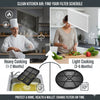
How Often to Replace Air Filters in Your Home
, by ABM Service, 16 min reading time
""Free Shipping on USA"" We do not provide any authorization invoice for amazon Resale.
, by ABM Service, 16 min reading time
Many people replace water filters on time but ignore the air filter inside the fridge. This small part controls odor, keeps air clean, and helps food stay fresh longer. A dirty filter can cause bad smells and make fruits, vegetables, and dairy spoil faster than normal. Many homeowners notice the issue only when the fridge smells bad or food loses fresh taste. Replacing the filter on time keeps the fridge working well and keeps the inside cleaner each day. This article explains signs of a worn filter, the right change schedule, and simple steps to maintain freshness. Clean filters also support better cooling and steady fridge performance daily.
How often should you change your air filter? The answer depends on several conditions rather than a single fixed timeline. Different environments, household needs, and system usage levels all affect how quickly an air filter becomes clogged. Since the air filter acts as the first line of defense for your HVAC system, understanding these factors is important for maintaining consistent airflow and indoor air quality. That’s why it’s important to recognize what influences replacement frequency so you can adjust your schedule accordingly.
Air quality directly affects how often you should change your air filter because higher levels of airborne particles cause faster buildup on the filter surface. When dust, smoke, or pollution levels are elevated, the filter has to work harder to trap contaminants, which shortens its usable life.
Some examples include:
In these conditions, it’s a good idea to check your filter every 30 days and replace it more frequently if it looks dirty or clogged.
Allergies or respiratory conditions impact air filter replacement frequency because cleaner air requires more consistent filtration. When someone in the home is sensitive to dust, pollen, or other allergens, the filter tends to accumulate particles more quickly while also needing to stay effective at a higher standard.
This means the system may require more frequent attention to maintain healthy indoor air quality. In most cases, checking the filter every 30 to 60 days is recommended, especially during high pollen seasons or flare-up periods.
Pets increase how often you should change your air filter because dander, hair, and tracked-in debris add extra strain to the filtration system. The more animals in the home, the faster the filter becomes saturated with particles.
This buildup can restrict airflow and reduce overall HVAC efficiency if not addressed regularly. Homes with pets typically benefit from checking the filter every 30 to 45 days and replacing it sooner during heavy shedding seasons.
Home size affects air filter lifespan because larger spaces require the HVAC system to circulate air over a wider area. This increased circulation can either distribute particles more widely or place more demand on the system, depending on layout and airflow patterns.
In larger homes, filters may need more frequent inspection because uneven airflow can lead to faster clogging in certain conditions. A good rule is to check the filter monthly, especially in multi-level or open-layout homes.
How often you use your HVAC system is one of the strongest factors influencing filter replacement timing because more runtime means more air passing through the filter. During peak heating or cooling seasons, filters collect particles at a much faster rate.
This increased workload means the filter can reach capacity sooner than expected, even within a few weeks. In high-usage periods, checking every 30 days is recommended, with replacement adjusted based on visible buildup.
Got it — I’ll remove the em dashes and keep everything clean.
An HVAC air filter works like the quiet guardian of your home’s comfort system, constantly protecting your indoor air from dust, debris, and airborne particles before they circulate through your space. Although it often goes unnoticed, it plays an essential role in maintaining both air quality and system performance. Without a properly functioning filter, your HVAC system can quickly become overloaded with contaminants, leading to reduced efficiency and poorer air quality.
At the core of HVAC air filters is the MERV rating, which stands for Minimum Efficiency Reporting Value. This rating shows how effectively a filter captures particles of different sizes. A higher MERV rating usually means stronger filtration and cleaner air, but it can also require more effort from the HVAC system to maintain airflow. Understanding HVAC air filters begins with recognizing this balance between filtration strength and system compatibility.
That balance is not always simple, similar to expecting a tightly woven net to trap extremely small particles while still allowing air to pass through easily. A filter that is too restrictive can make the HVAC system work harder than it should, while a filter that is too loose may allow more dust and pollutants into your home. This tradeoff between airflow and protection is what makes choosing the right filter more important than it first appears.
Choosing the right HVAC air filter depends on your specific living conditions and needs. Factors such as allergies, pets, and local air quality all influence the level of filtration that makes the most sense. When chosen correctly, the right filter helps maintain cleaner indoor air, supports better system efficiency, and reduces long term strain on your HVAC equipment while improving overall comfort.
Knowing when and how to change your air filter ensures your HVAC system runs efficiently and keeps fresh, clean air circulating throughout your home. A properly maintained filter helps reduce dust buildup, improves airflow, and supports healthier indoor air quality with consistent performance year-round.
Identify the correct filter size before replacing it. Look at the markings on your existing filter or check the HVAC unit manual to confirm dimensions so you can purchase the right replacement.
Switch off your heating or cooling system before starting. This prevents air from circulating while the filter is removed and keeps dust from spreading through your home.
Find the filter slot, usually in the return air grille or air handler unit. Slide the old filter out carefully, noting the direction of the airflow arrows for correct installation later.
Place the new filter into the slot, making sure the airflow arrows point in the correct direction. Ensure it fits snugly without bending or forcing it into place.
Restart your HVAC system after the filter is securely installed. Check for normal airflow and confirm the system is running smoothly for continued air circulation.
Air filters play a key role in maintaining indoor air quality, supporting HVAC efficiency, and reducing the amount of dust, allergens, and airborne particles circulating through your home. A properly used air filter helps your heating and cooling system run more smoothly while also protecting indoor air from pollutants that can affect comfort and health.
At a basic level, an air filter works by trapping contaminants as air moves through the HVAC system, preventing them from being redistributed into living spaces. Getting the most out of your air filters means understanding what they handle, how they function, and how to choose the right type for your needs.
Indoor air typically contains several types of particles that air filtration systems are built to remove, such as:
Air filters operate through a combination of physical filtration, fiber density capture, and in some cases electrostatic attraction, where particles are drawn to charged surfaces and held in place. As air passes through the filter media, contaminants are separated from the airflow and retained within the filter layers, allowing cleaner air to continue through the HVAC system.
This process gradually increases resistance over time, which is why filter performance naturally decreases as buildup accumulates.
Air filters generally fall into several main categories including pleated filters, HEPA filters, activated carbon filters, and electrostatic filters. Pleated filters are widely used for general household filtration, HEPA filters are designed for high-efficiency particle capture, activated carbon filters focus on odor and gas absorption, and electrostatic filters rely on charged media to attract particles. These categories often overlap in function depending on design, but each serves a slightly different role in improving indoor air quality.
Before choosing or maintaining an air filter, it is important to consider factors such as air quality needs, household conditions, HVAC system compatibility, and desired filtration efficiency.
Making the right choice affects not only how clean your indoor air remains but also how efficiently your system operates over time.
Air filters are typically rated and used based on their efficiency, material design, and compatibility with HVAC systems, with most residential options lasting anywhere from 30 days to several months depending on usage and indoor conditions. The actual performance and lifespan of an air filter are mainly influenced by air quality levels and system usage frequency, which determine how quickly particles accumulate and restrict airflow. Understanding the different types of air filters helps you choose the right balance between cost, efficiency, and filtration performance for your home.
Fiberglass air filters are the most basic and affordable option, made from layered fiberglass strands designed to capture large airborne particles. They are typically used for basic protection of HVAC systems rather than improving air quality. While they are cost-effective and easy to replace every 30 days, they offer the lowest filtration efficiency and allow smaller particles to pass through.
Pleated air filters use folded synthetic media to increase surface area and improve particle capture compared to fiberglass options. They are moderately priced and commonly used in residential homes, offering a good balance between airflow and filtration efficiency. These filters generally last 60 to 90 days, but higher efficiency versions may restrict airflow if not matched properly to the HVAC system.
Electrostatic air filters use self-charging fibers or washable materials to attract and trap airborne particles more effectively than standard filters. They are often reusable, which makes them more cost-efficient over time, and can last several months with proper maintenance. However, their performance depends on regular cleaning, and efficiency can vary if buildup is not properly removed.
HEPA air filters are high-efficiency filters designed to capture extremely small particles, including fine dust, allergens, and airborne pollutants. They offer the highest level of filtration performance and are commonly used in medical or high-sensitivity environments. However, they are often not compatible with standard HVAC systems without modification due to restricted airflow resistance.
Activated carbon air filters are specialized filters designed to absorb odors, gases, and chemical pollutants using a porous carbon medium. They are highly effective for improving indoor smell and reducing volatile organic compounds. However, they are less effective at capturing larger dust particles and are often used alongside other filter types for complete air purification.
MERV, or Minimum Efficiency Reporting Value, is a standardized rating system that measures how effectively an air filter captures particles of different sizes. The scale ranges from 1 to 20, with lower ratings indicating basic filtration and higher ratings indicating finer particle capture and improved air quality. Higher MERV filters provide better performance but may reduce airflow if the HVAC system is not designed to handle increased resistance, making proper selection essential for system efficiency and indoor comfort.
A bad air filter shows clear warning signs as airflow becomes restricted and contaminants begin circulating more freely through your HVAC system. When the filter is clogged or worn out, performance drops and noticeable changes start appearing in both air quality and system efficiency.
The life span of air filters varies significantly depending on factors such as air quality, household conditions, and how often the HVAC system is used. Homes with higher levels of dust, pets, pollen, or frequent system operation tend to require more frequent filter changes, while cleaner environments may allow filters to last longer before becoming clogged and less effective.
Most manufacturers generally agree that standard HVAC air filters should be replaced every 90 days, or about three months, under normal residential conditions. This guideline is also commonly supported by industry recommendations, including the EPA, which emphasizes regular replacement to maintain proper airflow and indoor air quality.
Different types of filters have different life spans. Basic fiberglass filters typically last around 30 days due to their lower capacity for particle capture. Pleated filters usually last between 60 and 90 days, depending on usage and air quality conditions. HEPA filters can last up to 6 to 12 months in some systems, although they should be checked more frequently to prevent buildup that can restrict airflow. Activated carbon filters do not have a fixed replacement schedule and are generally replaced when odor control begins to weaken, based on manufacturer recommendations.
While these timelines provide a general framework, the actual life span of an air filter always depends on real-world conditions in the home, making regular inspection the most reliable way to determine when replacement is needed.
A dirty air filter usually shows several noticeable signs, including reduced airflow, increased dust buildup, unusual odors, and uneven heating or cooling throughout the home. In some cases, allergy symptoms may become more noticeable as indoor air quality declines. Visible dirt, dark discoloration, or clogged filter material are also strong indicators that replacement is needed.
For many homes, replacing the air filter every 3 months is a common general guideline. However, this timeline can change depending on factors such as pets, allergies, smoking, construction dust, or heavy HVAC usage. Homes with higher airborne particle levels may need filter replacement every 30 to 60 days to maintain proper airflow and indoor air quality.
If an air filter is never changed, it can become heavily clogged with dust and debris, restricting airflow and forcing the HVAC system to work harder. Over time, this can reduce energy efficiency, increase wear on system components, and lower indoor air quality. In severe cases, excessive buildup may contribute to overheating issues, uneven temperature control, and potential system damage.
Air filters can last anywhere from 30 days to 12 months depending on the filter type, indoor air quality, and HVAC usage. Basic fiberglass filters usually last about 30 days, while pleated filters often last 60 to 90 days under normal conditions. Higher-efficiency filters such as HEPA models may last longer, but they still require regular inspection to prevent airflow restriction and reduced system performance.
Expensive air filters often last longer because they are typically made with higher-quality materials and larger filtration surfaces that can trap more particles over time. Many premium pleated or high-efficiency filters are designed to last between 6 and 12 months under normal conditions. However, actual lifespan still depends on factors such as air quality, pets, allergies, and HVAC usage, so regular inspection is still important.
Delaying an air filter replacement can cause dust and debris to build up inside the filter, restricting airflow and reducing HVAC efficiency. As the filter becomes clogged, the system may run longer, consume more energy, and struggle to maintain consistent temperatures. Over time, poor filtration can also lower indoor air quality and increase wear on HVAC components.


