
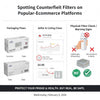
How to Spot Counterfeit Filters Online and Avoid Costly Mistakes
, by ABM Service, 5 min reading time
""Free Shipping on USA"" We do not provide any authorization invoice for amazon Resale.
, by ABM Service, 5 min reading time
Fake water filters sold online can look real, but they often fail to clean water well. Many buyers only find out after poor taste, leaks, or damage to their system. This guide helps you spot real ones before you spend money.
Continue reading to learn simple ways to check packaging, seller details, and product codes so you avoid costly mistakes and choose safe filters online.
Counterfeit water filters are unauthorized imitations made to look like genuine products. They often replicate branding elements such as logos, labels, and model identifiers, but are not built or tested to the same standards. Because they bypass proper certification and quality checks, they may deliver weaker filtration, reduce appliance performance, and even create issues with warranty protection. Understanding these risks is the first step in avoiding unsafe purchases.
Fake filters usually reveal themselves through small but noticeable details. Common warning signs include spelling errors, faded or uneven printing, inconsistent typography, and missing certification marks. You may also notice model numbers that don’t match the standard format, along with packaging that feels flimsy, arrives unsealed, or uses poorly applied labels and stickers.
Water filtration systems used in refrigerators, pitchers, and under-sink units depend on carefully engineered materials and construction to effectively improve drinking water quality. When counterfeit versions enter the market, they often bypass proper design standards and may not deliver the expected level of protection.
In May 2023, U.S. Customs and Border Protection (CBP) intercepted and confiscated 3,940 fake water filters that illegally displayed National Sanitation Foundation (NSF) certification marks. These products were found to be ineffective when tested, including a failure to properly remove lead and other harmful substances from water.
Separate testing referenced by the Association of Home Appliance Manufacturers (AHAM) in 2018 also highlighted widespread issues with counterfeit refrigerator filters sold through major online platforms. Many imitation versions of filters from brands such as LG, Electrolux, Samsung, Whirlpool, GE Appliances, and Sub-Zero did not adequately reduce lead or cyst contamination, and some even introduced unwanted chemicals into the water supply.
It is also important to recognize that performance can differ among legitimate water filters, meaning some certified products may still be more effective than others at targeting specific contaminants.
Poor Filtration Performance
Counterfeit filters may fail to properly reduce harmful substances in drinking water, including lead, mercury, pesticides, asbestos, and traces of pharmaceuticals. This can result in water that looks clean but is not fully safe to consume.
Leakage and Appliance Damage
Improper fit or low-quality construction can lead to leaks inside the refrigerator. Over time, this may cause water damage in the kitchen area and affect the performance of the appliance.
Warranty Protection Concerns
Using non-genuine filters can also put manufacturer warranty coverage at risk. If damage occurs as a result of a counterfeit product, repairs or replacements may not be covered.
Packaging Check
Look closely at the packaging for signs of inconsistency. Counterfeit filters often use outdated box designs, blurry printing, incorrect logos, or spelling errors that differ from official branding.
Price Red Flag
Be cautious of unusually low prices. If a filter is significantly cheaper than standard retail pricing, it may be a counterfeit product that cuts corners on quality and safety.
Shipping Origin
Another important factor is where the product comes from and who is selling it. Filters shipped from outside the United States or outside authorized distribution channels may not meet original standards.
Certification Marks
Check for official certification labels such as NSF markings. Missing, unclear, or altered certification logos can indicate the filter has not been properly tested or approved.
Model Number Accuracy
Confirm that the model number matches the manufacturer’s official listings. Fake filters often use incorrect, outdated, or slightly modified codes to appear legitimate.
Seller Credibility
Review the seller’s reputation before purchasing. Unknown vendors, limited contact details, or poor reviews can signal a higher risk of counterfeit products.
By taking the time to verify the source, pricing, certifications, and compatibility of a water filter, consumers can confidently choose authentic products that provide safe, clean drinking water and long-term value.:
Finding a trustworthy online seller can be challenging, especially on large marketplaces where multiple vendors may offer the same product. Before making a purchase, take a few steps to confirm that the filter comes from a reliable source.
Buy from the manufacturer directly. Ordering through the brand’s official website is one of the most reliable ways to ensure product authenticity.
Choose authorized retailers. Many manufacturers publish lists of approved distributors and dealers on their websites for easy verification.
Verify marketplace sellers. When shopping on online marketplaces, make sure the seller is recognized or approved by the brand.
Review the product listing carefully. Compare descriptions, images, and specifications with information provided by the manufacturer. Check customer feedback and be cautious of prices that seem unusually low compared to other listings.


