
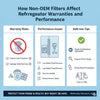
Non-OEM Refrigerator Filters: Do They Void Your Warranty?
, by ABM Service, 7 min reading time
""Free Shipping on USA"" We do not provide any authorization invoice for amazon Resale.
, by ABM Service, 7 min reading time
Non-OEM refrigerator filters often raise concern about warranty rules. Many homeowners worry they will lose protection after using off-brand filters. This article explains warranty rules, performance, and safety so decisions become clear. Read on to understand how these filters affect your refrigerator and choices. Clear guidance helps avoid confusion when choosing between OEM and non-OEM options for daily use. Stay with the next section for details now below.
OEM stands for Original Equipment Manufacturer. An OEM refrigerator filter comes from the refrigerator brand itself or from a company approved by that brand. Manufacturers design these filters to meet the exact requirements of specific refrigerator models.
Non-OEM refrigerator filters, also called aftermarket refrigerator filters, come from third-party companies. These companies make replacement filters that work with many refrigerator brands and models. Most aftermarket filters aim to offer similar filtration at a lower price.
Several differences separate OEM and Non-OEM filters. The biggest differences often include price, branding, testing methods, and manufacturing controls. Many homeowners compare the following factors before buying:
Whether a third-party refrigerator water filter impacts your warranty depends on the appliance brand and the specific terms of the warranty agreement. Because policies can differ between manufacturers, it’s a good idea to review your warranty documentation before choosing a replacement filter.
In general, consumer protection laws prevent manufacturers from automatically canceling a warranty simply because you use a compatible filter made by another company. However, if an aftermarket filter directly causes damage or a defect, the manufacturer may deny coverage for repairs related to that issue. As a result, using a quality replacement filter from a reputable source is important for maintaining both performance and warranty protection.
Warranty coverage may be denied if damage results from improper installation, using an incompatible water filter, forcing a filter into place, or other forms of misuse. While manufacturers generally cannot void a warranty simply because you choose a third-party filter, they may refuse coverage when a non-approved filter directly causes damage to the refrigerator or its water filtration system.
Changing your refrigerator’s water filter helps keep your drinking water and ice clean and properly filtered. As the filter ages, it collects contaminants that can reduce its effectiveness and create an environment where bacteria may grow.
Most manufacturers recommend replacing the water and ice filter every six months. While many refrigerators include a filter reminder light, it operates on a preset schedule and does not measure the actual condition or performance of the filter.
The type of water filter you need depends on your refrigerator’s brand and specific model. Since filter designs vary between manufacturers, it’s important to select a replacement that is made to fit your refrigerator correctly.
You should also decide whether to purchase an original manufacturer (OEM) filter or a compatible aftermarket option. Both types are available for many refrigerator models, but the right choice will depend on your budget, preferences, and filtration needs.
OEM stands for Original Equipment Manufacturer, meaning the filter is produced by the same company that manufactures your refrigerator. These filters are commonly marketed as genuine or factory-approved replacements. Aftermarket refrigerator filters, sometimes called compatible, third-party, or non-OEM filters, are manufactured by independent companies and designed to fit specific refrigerator models.
The key differences between OEM and aftermarket refrigerator water filters typically come down to price, filtration performance, and the range of contaminants they are certified to reduce. While OEM filters are often more expensive, they are designed to meet the manufacturer's specifications. Aftermarket options can offer cost savings, but filtration quality and contaminant reduction capabilities may vary depending on the brand and certification standards.
Aftermarket refrigerator water filters are often a more affordable alternative to OEM (Original Equipment Manufacturer) filters.
If you're considering a non-OEM replacement filter, it's important to choose one that is NSF-certified. NSF certification confirms that the filter has been independently tested and meets established standards for reducing specific contaminants. The most common certifications to look for are NSF/ANSI 42 and NSF/ANSI 53, which indicate the filter is verified to improve water quality and reduce certain impurities.
Proper fit is one of the most important parts of refrigerator filter performance. A filter that does not fit correctly may cause installation problems or prevent the system from working as expected. Some refrigerator models have strict design requirements that make compatibility very important.
Many newer refrigerators include sensors or electronic systems that monitor filter status. Certain Non-OEM filters may not communicate correctly with these systems. As a result, users may see warning messages, filter alerts, or reset issues even after installing a new filter.
Poor fit can also increase the risk of leaks. A small gap around the seal may allow water to escape over time. Even a minor leak can create problems if it goes unnoticed for weeks or months.
Water flow plays a major role in daily refrigerator use. Slow water dispensing can become frustrating, and reduced flow may affect ice production as well. A good filter should balance filtration performance with steady water pressure.
Some Non-OEM refrigerator filters may restrict water flow more than expected. Lower-quality materials or design differences can affect how water moves through the filter. This issue may become more noticeable as the filter collects sediment and other particles.
Filter maintenance also affects performance. A clogged filter can slow water flow regardless of whether it is OEM or Non-OEM. Regular replacement helps keep water moving smoothly and supports better filtration results.
Correct installation reduces the risk of leaks and other problems. Many filter issues start when the filter is not fully locked into place or when users install the wrong model. Taking a few extra minutes during installation can prevent costly repairs later.
Internal leaks can damage refrigerator components, flooring, and nearby cabinets. Water damage often develops slowly, making it harder to spot in the early stages. Regular inspections help homeowners catch small problems before they become larger ones.
Long-term damage can occur if a poor-quality filter fails under normal use. Cracks, weak seals, or manufacturing defects may create ongoing issues. For this reason, buyers should choose replacement refrigerator water filters from trusted companies with a solid record of quality.
Counterfeit refrigerator water filters are different from standard third-party alternatives because they are designed to imitate the original product. At first glance, they may appear identical to the manufacturer’s filter, but small details can reveal otherwise.
The box design and filter housing may closely resemble the genuine version. However, a closer look might uncover minor inconsistencies, such as variations in label placement, printed graphics instead of authentic security markings, or slight differences in cap color and finish.
Pricing can also provide an important clue. When a filter is offered at a dramatically lower cost than the original manufacturer’s product, it may be worth investigating further before making a purchase.
Unlike counterfeit products, most aftermarket filter brands clearly identify themselves as independent manufacturers. Although these filters are often more affordable than OEM options, they are typically marketed under their own brand names rather than being presented as the original product.
Non-OEM refrigerator filters do not automatically void a refrigerator warranty. Warranty issues usually depend on whether the filter caused damage or contributed to a specific problem. Keeping records and choosing a compatible filter can help reduce concerns.
Performance varies across the aftermarket filter market. Some Non-OEM refrigerator water filters deliver strong filtration, steady water flow, and dependable service. Others may fall short in quality, fit, or durability.
Buyers should focus on compatibility, certification, product quality, and manufacturer reputation before making a purchase. A well-made filter can provide clean water and good value, while a poor-quality filter may create unnecessary problems. Careful selection remains the best way to protect both your refrigerator and your water quality.


