
How to Extend Your Refrigerator’s Life Longer Than Expected
, by ABM Service, 8 min reading time
""Free Shipping on USA"" We do not provide any authorization invoice for amazon Resale.
, by ABM Service, 8 min reading time
A fridge water filter that stops working can ruin daily drinking water fast at home without warning signs. Many homes keep using old filters far past safe use and lose clean water flow each year without notice which affects taste and quality level. This can raise taste issues and reduce water flow without clear warning from the system during normal daily usage cycles. This guide shows a simple way to pick the right filter and keep it working longer for better home use with steady and reliable water output.
Clear steps help you avoid waste and get steady clean water every day at home with simple care habits and reduce replacement costs. Smart choices also support better fridge performance and fewer repair needs over time in daily use for long lasting results. Keep reading to find easy buying tips that fit any refrigerator model and match common home needs for better daily use.
Selecting a water filter requires understanding basic performance needs for clean and safe drinking water use. Filter lifespan affects performance and maintenance needs over time for consistent water quality and efficiency in daily use.
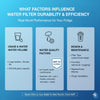
Your filters' longevity can be affected by:
Filter lifespan depends on several real-world conditions that influence how efficiently the system continues to perform over time.
Keep an eye out for these changes that may indicate it’s time to replace your filter:
Tracking your filter’s condition and noticing these warning signs helps ensure you always get clean, safe water. Replacing filters on time according to manufacturer guidelines and your actual usage habits is important for keeping filtration performance at its best.
Filter compatibility ensures your replacement filter fits and functions correctly with your refrigerator system. Using the wrong filter can reduce performance and cause poor water flow issues. Proper matching helps maintain safe and consistent water filtration quality.
Incorrect filter selection may bypass proper sealing and allow unfiltered water to pass through the system. Always check model numbers and manufacturer specifications to avoid compatibility problems with different refrigerator brands and filter types.
Filter capacity and performance ratings determine how much water a filter can process before needing replacement in real conditions. However, higher capacity does not always mean better filtration quality. Some filters may still perform differently depending on usage and water quality levels in different households.
NSF certification standards help verify a filter’s claimed performance and contaminant reduction ability under tested conditions. This ensures consistent filtration results and reliable water safety over time.
Most modern refrigerators feature tool-free filter replacement designed for homeowners. Here's the universal process:
Turn the old filter counterclockwise and gently pull it straight out of the housing. Remove all packaging from the new filter, keeping protective caps in place until installation. Align the new filter with the guide slots and push it firmly into position. Rotate clockwise until it locks securely, usually about a quarter turn. Run 2–3 gallons of water through the dispenser to clear air and carbon residue.
Reset your refrigerator’s filter indicator light according to the user manual. Confirm the filter is fully sealed with no leaks or bypass. Test water taste and flow after the initial flush to ensure proper performance.
Water quality monitoring is an essential step in maintaining consistent performance from any filtration system. By regularly tracking indicators such as dissolved solids, taste changes, and physical clarity, users can determine when a filter is beginning to lose effectiveness. Simple tools like TDS meters provide quick insight into overall water purity, while sensory changes often signal early-stage filter fatigue before visible issues appear.
Watch for these key performance indicators:
Properly optimizing filter performance and maintenance ensures consistent water quality and system efficiency by regularly replacing filters on schedule, monitoring flow rate, and following manufacturer care guidelines, which helps extend filter life, maintain clean taste, and protect overall refrigerator water system performance.
Proper maintenance is essential to ensure long-lasting performance and consistent filtration quality. The lifespan of a filter depends largely on its type and usage conditions.
Depending on the type, filters will have different maintenance requirements:
To maintain optimal performance, inspect your system regularly for flow reduction or taste changes, as these often indicate reduced filter efficiency. Most filters rely on activated carbon, which gradually becomes saturated over time, making timely replacement essential to preserve water quality and system effectiveness.
Selecting the correct water filter depends on your household water quality and the contaminants present in your supply. A basic water test can identify issues such as chlorine, lead, sediment, hard minerals, or volatile organic compounds (VOCs).
Choose a filtration system that matches both your water conditions and your daily consumption needs. Considering household size, maintenance requirements, and target contaminants will help ensure consistent long-term filtration performance.
Effective filter performance plays a direct role in safeguarding drinking water quality and reducing exposure to harmful contaminants. When filtration systems function properly, they help ensure safer water that supports overall health and daily hydration needs.
Maintaining filter efficiency is essential for sustaining clean water output, protecting household health, and minimizing long-term exposure to harmful substances commonly found in untreated or poorly filtered water.
Reduced water flow often results from filter clogging, though other system factors may also contribute.
If pressure remains low after these checks, the issue may involve internal plumbing or system faults requiring professional inspection.
Water bypassing the filter defeats the entire system's purpose. Common causes include:
Always hand-tighten filters according to manufacturer specifications. Over-tightening can damage sealing components. Clear glass of filtered water illustrating proper filtration performance.


