
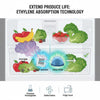
Understanding Ethylene Absorption Technology & Extends Produce Freshness
, by ABM Service, 11 min reading time
""Free Shipping on USA"" We do not provide any authorization invoice for amazon Resale.
, by ABM Service, 11 min reading time
Ethylene gas builds up around fresh produce and makes fruits and vegetables spoil faster than expected. Many people notice bananas turning soft or leafy greens losing color soon after storage and wonder why it happens so quickly.
Ethylene absorption technology helps slow this process by reducing the gas around stored food. This article explains how it works, why it matters, and what to look for when choosing options for home refrigerators.
Ethylene gas (C₂H₄) is a natural plant hormone released by fruits and vegetables during ripening. It controls growth changes in plant tissue and signals the shift from raw to ripe stages in produce.
This gas spreads in closed storage spaces and reacts with nearby food, which leads to faster ripening and quality loss. In refrigerators or storage bins with limited airflow, ethylene builds up and speeds up chemical changes in fresh produce.
High ethylene producers such as bananas, apples, and avocados release larger amounts during ripening, while items like leafy greens, carrots, and cucumbers show higher sensitivity to exposure. This uneven response causes soft texture, color fading, and faster decay across mixed storage groups when they stay together.
Ethylene absorbers are designed to remove or neutralize ethylene gas produced by fruits and vegetables during the natural ripening process. In refrigerator environments, these absorbers help to slow premature spoilage, maintain freshness, and reduce the rate of over-ripening. By limiting ethylene accumulation inside enclosed storage spaces, they also help minimize food waste and preserve texture quality for longer periods.
Ethylene absorbers are available in several formats depending on storage capacity, refrigerator design, and maintenance requirements.
Ethylene absorbing sachets are small packets filled with mineral-based or activated materials that capture ethylene gas from the surrounding air. They are commonly placed inside vegetable drawers, fruit compartments, or refrigerator shelves where fresh produce is stored. Replacement frequency can vary depending on refrigerator usage, produce volume, and the absorption capacity of the sachet material.
Ethylene absorbing balls or spheres are portable devices designed with internal filtration materials that continuously reduce ethylene concentration inside refrigerator compartments. They are typically positioned near fruits and vegetables or inside crisper drawers to improve air quality around stored produce. Maintenance requirements generally include periodic filter replacement or reactivation based on manufacturer recommendations.
Ethylene absorber mats or pads are flat absorbent layers designed to be placed underneath fruits and vegetables in refrigerator drawers or storage containers. These products help absorb excess ethylene gas while also managing moisture accumulation around produce surfaces. Replacement intervals usually depend on moisture exposure, storage conditions, and the quantity of produce being preserved.
Ethylene removal machines are larger filtration systems designed for commercial refrigeration units, cold storage facilities, and food distribution environments. These systems use advanced filtration technologies, oxidation processes, or air circulation mechanisms to continuously remove ethylene gas from enclosed storage areas. Maintenance schedules generally involve filter servicing, airflow inspections, and routine operational monitoring to maintain consistent performance levels.
Ethylene absorbers can improve preservation efficiency in both residential and commercial refrigeration environments. However, their overall effectiveness can vary based on refrigerator airflow, produce type, storage temperature, humidity levels, and the concentration of ethylene-producing foods stored within the compartment.
Ethylene absorbers can support freshness control in more ways than basic refrigerator storage. Their use extends across different storage systems and handling methods where produce quality needs stable conditions. Here are several practical applications that show how they fit into wider food storage and handling setups.
Smart storage containers use built-in ethylene absorber inserts to manage gas levels inside sealed food boxes. These containers are placed in kitchen storage areas or refrigerator compartments where mixed produce is kept. By reducing ethylene buildup inside closed spaces, they help slow ripening and reduce early spoilage in stored fruits and vegetables.
Modified Atmosphere Packaging (MAP) combines controlled gas environments with ethylene absorption materials inside sealed food packs. This setup is used in packaged fruits and vegetables during transport and storage. By stabilising the internal atmosphere and lowering ethylene exposure, this method helps extend shelf life and maintain texture and colour quality.
Cold chain transport systems use ethylene absorbers inside refrigerated trucks and delivery boxes. These systems move fresh produce over long distances under controlled temperature conditions. By managing ethylene levels during transit, they help reduce ripening speed and maintain produce quality before it reaches retail locations.
Retail display units integrate ethylene absorbers into shelving systems and produce bins in supermarkets. These units hold mixed fruits and vegetables under constant customer exposure and airflow changes. By controlling ethylene in open display environments, they help maintain freshness and reduce visible spoilage on shelves.
Using ethylene absorbers in refrigerator environments provides several key advantages that support longer-lasting freshness and improved food quality. These benefits are outlined below:
|
Benefit |
Description |
|
Longer Storage Life |
Ethylene absorbers work by reducing ethylene gas levels, which slows down the natural ripening cycle. This helps fresh produce remain usable for an extended period, making it particularly useful for households that store larger quantities of fruit and vegetables. |
|
Preservation of Nutrients |
By delaying the ripening process, these absorbers help maintain essential nutrients such as vitamins and antioxidants in fresh produce. This ensures fruits and vegetables retain more of their original nutritional quality over time. |
|
Better Taste and Texture Retention |
Slowing down over-ripening helps maintain the natural taste and firmness of produce. Items such as apples, avocados, and bananas stay fresher in both flavour and texture for longer durations. |
|
Improved Hygiene and Storage Conditions |
Reducing excess ethylene in storage environments can help minimise spoilage-related issues, including mould development and bacterial growth, contributing to safer food storage overall. |
|
Lower Household Food Waste |
By extending freshness periods, ethylene absorbers help reduce the frequency of discarded produce. This supports more efficient household consumption and can also contribute to reduced environmental impact. |
Overall, ethylene absorbers help slow down natural ripening activity, allowing fruits and vegetables to remain fresher, more nutritious, and better tasting for longer periods. This not only supports cost savings but also encourages more sustainable food storage practices.
Choosing an ethylene absorber for a refrigerator depends on storage needs, produce load, and usage conditions. Different products work in different ways, so careful selection helps improve freshness control and reduce food waste. The right choice also depends on how long food stays stored and how often the absorber gets replaced.
Absorption Capacity
Absorption capacity refers to how much ethylene a product can capture over time. Higher capacity works better for larger storage loads or frequent grocery storage. Stronger capacity helps maintain stable freshness for longer periods before replacement is needed.
Product Format
Product format includes sachets, pads, balls, and electronic units. Each format fits different storage setups such as drawers, containers, or open shelves. The correct format improves contact with stored produce and increases overall efficiency.
Replacement Cycle
Replacement cycle shows how long the absorber stays effective before it needs changing. Short cycles suit heavy storage use, while longer cycles support low-maintenance needs. A proper cycle helps maintain steady performance without gaps in protection.
Storage Compatibility
Storage compatibility refers to how well the absorber fits inside different refrigerator layouts. Some designs work better in crisper drawers, while others suit multi-zone compartments. Good compatibility ensures even distribution of ethylene control across stored items.
Material Composition
Material composition affects how well the absorber reacts with ethylene gas. Natural minerals, activated carbon, or chemical blends each provide different performance levels. The right material choice supports better control of ripening speed and food quality retention.
Ethylene absorbents for home refrigerators come in several forms, and each type fits different storage needs and fridge setups.
Ethylene absorber sachets
These are small packets filled with mineral-based or carbon materials that trap ethylene gas. They are placed in refrigerator drawers or near fresh produce for steady gas control. They work well for general home use and usually last for several weeks before replacement.
Ethylene absorber pads or sheets
These are flat, flexible layers that spread across crisper drawers for wider coverage. They sit under or around fruits and vegetables to manage ethylene exposure more evenly. They suit larger storage loads and help maintain balanced freshness across mixed produce.
Reusable absorber containers or cartridge systems
These are compact units designed for longer use inside refrigerators. They stay in a fixed position and support extended cycles compared to disposable types. They work best for users who want lower replacement frequency and stable long-term storage support.
Fresh produce items that are commonly packed with ethylene absorbers include fruits and vegetables that either produce ethylene gas or react strongly to it:
Bananas: Bananas are known to produce high levels of ethylene gas during ripening. This can accelerate the softening and darkening of nearby fruits when stored together. Using ethylene absorber packets in storage containers helps slow down this process and maintain freshness for a longer period.
Apples: Apples release ethylene gas as they ripen and can influence other nearby produce. This can lead to faster ripening and reduced storage life in mixed fruit settings. Ethylene absorbers used in refrigerator storage or packaging help reduce gas buildup and support better shelf stability.
Avocados: Avocados produce ethylene gas as they move from firm to ripe stages. This often causes uneven ripening and quicker spoilage in confined storage spaces. Placing ethylene absorbers in storage areas helps extend shelf life and maintain better texture control.
Leafy greens: Leafy greens such as lettuce and spinach are highly sensitive to ethylene exposure. This can result in wilting, discoloration, and loss of crisp texture. Ethylene absorber sachets in refrigerator drawers help reduce exposure and maintain freshness.
Cucumbers: Cucumbers react quickly to ethylene gas, which can lead to soft spots and faster decay. This often reduces their storage life in mixed produce environments. Using ethylene absorbers in storage bins helps prevent premature spoilage and supports longer freshness.
Ethylene absorbers are safe to use when placed correctly inside refrigerator storage areas. Users should follow manufacturer's instructions and avoid direct contact with unpacked food to prevent contamination. Regular replacement also supports safe performance and helps maintain stable freshness control inside storage spaces.
These absorbers are compatible with most home refrigerators, including single-door, double-door, and multi-zone models. They fit easily into drawers, shelves, and storage containers without affecting cooling performance. This wide compatibility makes them suitable for different kitchen setups while keeping use simple and practical.
Ethylene absorbers help maintain better food storage conditions by slowing ripening, reducing spoilage, and preserving the natural quality of fresh produce. These benefits support longer shelf life, lower food waste, and more stable freshness across different types of fruits and vegetables. This solution works well for households with daily storage needs as well as users who store mixed produce in refrigerators.
A wide range of ethylene absorber products is available for different storage needs and refrigerator types. These products are designed to provide consistent performance and simple use in everyday kitchen setups. You can explore suitable options and choose one that matches your storage needs to start improving freshness and reducing waste in your home.


